Discover Lake Neusiedl Nature: Reeds, UNESCO World Heritage & Bird Paradise in Seewinkel National Park
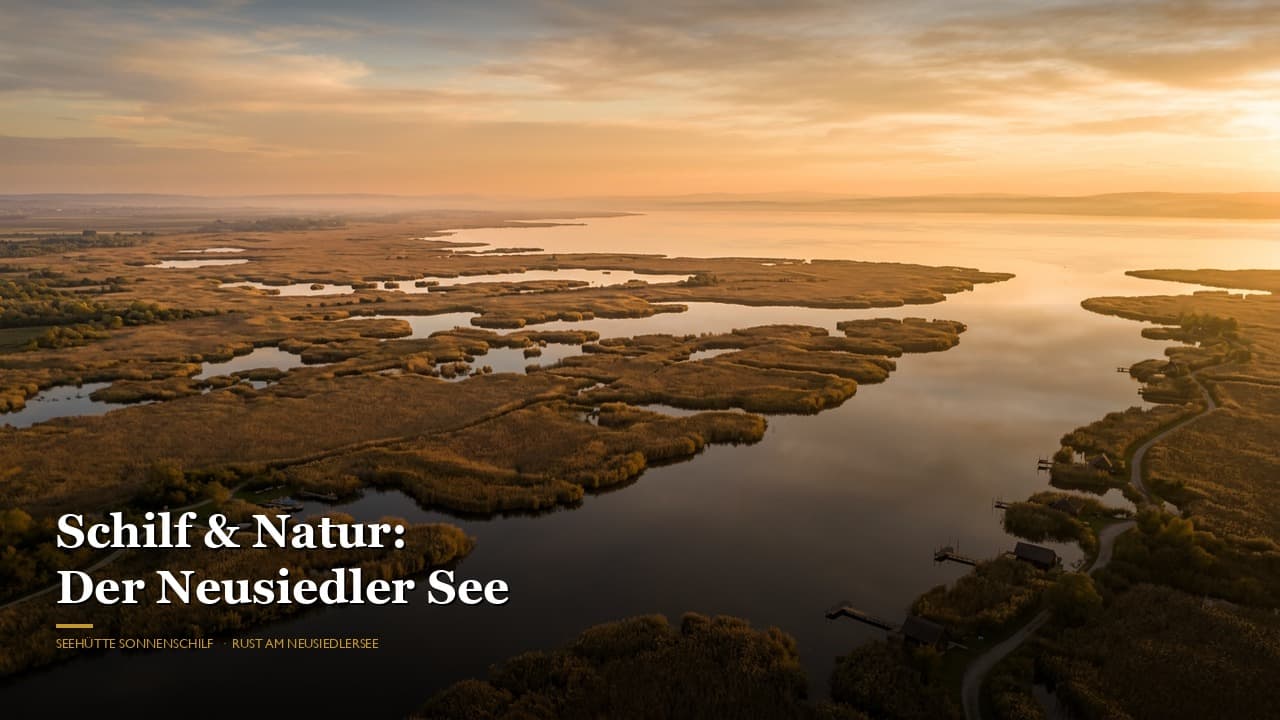
Lake Neusiedl is a natural jewel in the heart of Europe – and one of the most fascinating lakes on the entire continent. As the westernmost steppe lake in Europe, it combines a unique blend of water, reeds, and Pannonian steppe. Since 2001, the region has been a UNESCO World Heritage site, and for good reason: few other places offer such a diversity of habitats in such a compact area. For nature lovers, birdwatchers, and those seeking tranquility, Lake Neusiedl is a true paradise – and the Seehütte Sonnenschilf is the perfect base to experience this Lake Neusiedl nature up close.
The Reed Belt – The Green Heart of Lake Neusiedl
The reed belt of Lake Neusiedl, covering approximately 178 square kilometers, is one of the largest contiguous reed beds in Europe. It surrounds the lake like a natural protective barrier and is home to an incredible diversity of animal and plant species. The common reed (Phragmites australis) grows up to four meters tall here, forming a dense labyrinth of water channels, open areas, and hidden coves.
For visitors to the Seehütte Sonnenschilf, the reed belt holds special significance: the cottage is situated directly in the reeds, embedded in this fascinating natural landscape. From the private terrace, you can hear the gentle rustling of the reed stalks, watch the play of light on the water, and enjoy the incomparable tranquility that only a place in the midst of nature can offer.
Reeds are far more than just a plant. They fulfill important ecological functions: they filter water naturally, provide protection against erosion, and regulate the microclimate in the shoreline zone. Furthermore, they have been a valued raw material for roofing for centuries – reed roofs are a traditional architectural feature in the Seewinkel and throughout the entire region.
The Reed Belt Through the Seasons
In spring, the reed belt awakens to new life. Young, bright green shoots break through the brown remnants of the previous year, and countless birds return from their winter quarters to breed here. In summer, the fully grown reeds offer a cool retreat and perfect conditions for nature photography. Autumn transforms the reed belt into a golden-brown sea that looks particularly picturesque in the evening light. And even in winter, when frost and snow cover the landscape, the reeds have their charm – the silence is particularly intense then, and the clear winter air offers its own unique atmosphere.
UNESCO World Heritage Lake Neusiedl – A Cultural Landscape of Global Significance
The Fertő/Neusiedler See Cultural Landscape was inscribed on the UNESCO World Heritage List in 2001. This designation honors not only the natural beauty of the region but also the interaction between humans and nature that has continued for over 8,000 years. The salt pans of the Seewinkel, the historic old town of Rust with its stork-nest-adorned roofs, and the traditional wine-growing culture – all of this makes this region a unique cultural space without equal.
The cross-border cooperation with Hungary underscores the international significance of this natural area. The Fertő-Hanság National Park on the Hungarian side and the Neusiedler See-Seewinkel National Park on the Austrian side together form a protected area of enormous ecological importance. This transnational cooperation is an exemplary model for international nature conservation in Europe.
What Makes the UNESCO Cultural Landscape So Special?
It is the unique combination of different habitats in the smallest possible space: steppe lake, reed belt, salt pans, pastures, and vineyards exist here side by side. This diversity is found nowhere else in Europe. Add to this historic villages such as Rust, Mörbisch, and Illmitz, which have preserved their traditional character to this day. The wine-growing culture spanning over 2,000 years, the stork nests on the historic rooftops of Rust, and the Pannonian architecture complete the picture of a vibrant, sustainable cultural landscape.
Bird Paradise Lake Neusiedl – Over 340 Species
Lake Neusiedl and the adjacent Seewinkel National Park are one of the most important bird paradises in Europe. Over 340 bird species have been recorded here – a record that makes the lake a mecca for birdwatchers from around the world. The location at the intersection of the East Atlantic and Central European flyways makes the lake an important stopover for millions of migratory birds.
In spring and autumn, spectacular scenes unfold: thousands of greylag geese, spoonbills, and black-winged stilts rest in the shallow waters of the salt pans. In summer, rare species such as the white stork, the great bustard, and the avocet breed here. The Seehütte Sonnenschilf is an ideal starting point for birdwatching – from the terrace alone, you can observe herons, great egrets, and with a bit of luck, even white-tailed eagles. Regularly spotted species also include bee-eaters, European rollers, and various woodpecker species.
The Best Observation Spots in the National Park
The Seewinkel National Park offers numerous observation stations and guided excursions. Particularly recommended are:
- Lange Lacke: One of the largest salt pans with excellent opportunities for observing waders and waterfowl – a particular hotspot in spring and autumn
- Illmitz Zicklacke: Known for large congregations of avocets and black-winged stilts
- Biological Station Illmitz: The National Park's information center with exhibitions, guided tours, and binocular loans
- St. Andräer Zicksee: An important breeding site for various duck species and waders
- Sandeck-Neudegg: One of the best places for observing birds of prey
The Neusiedler See-Seewinkel National Park
Founded in 1993, the national park covers an area of approximately 97 square kilometers on the Austrian side. It protects a unique landscape shaped by the interplay of steppe lake, reed belt, and salt pans. The more than 40 salt pans – called "Lacken" – are globally unique: these shallow, periodically drying water bodies have a high salt content and provide habitat for specialized species otherwise found only in the steppes of Central Asia.
The pastures of the Seewinkel, grazed by Hungarian grey cattle and white donkeys for centuries, are another highlight of the national park. This traditional land management preserves an open steppe landscape that is vital for many ground-nesting birds. The great bustard, one of the heaviest flying birds in the world, finds one of its last refuges in Central Europe here.
Flora of the National Park
Besides the wildlife, the plant life of the national park is equally impressive. In the salt steppes, rare halophilic (salt-loving) plants grow, such as the Pannonian sea aster and salt cress. In the reed belt, alongside the dominant reed, you can find sedges, cattails, and the rare marsh spurge. In spring, the meadows transform into a colorful sea of flowers with orchids, irises, and pasque flowers. In total, over 800 flowering plant species have been documented in the national park.
Experience Nature from the Seehütte Sonnenschilf
The Seehütte Sonnenschilf is not simply accommodation by the lake – it is a gateway to nature. The unique location directly in the reed belt enables nature experiences that no hotel or ordinary holiday home can offer. In the morning, you wake to birdsong; during the day, herons glide silently over the water; and in the evening, the sky turns the most spectacular colors you have ever seen.
With the free boat that comes with the Seehütte, you can explore the lake on your own. Navigate through the reed channels, discover hidden coves, and observe wildlife from close range. The free E-bikes enable excursions into the national park, to the salt pans, and to the charming villages of the region. From Rust, you can reach the Biological Station Illmitz in about 30 minutes by bike – a beautiful ride through the Pannonian landscape.
Tips for Nature Observers
- Best time for birdwatching: April/May and September/October (migration season)
- Sunset: The view from the Seehütte looking west offers spectacular evening moods – have your camera ready!
- Starry sky: Thanks to low light pollution, a paradise for stargazers and astrophotographers
- Early morning tour: Wildlife is most active in the first hours after sunrise
- Binoculars: Bring a good pair of binoculars – essential for birdwatching
Sustainable Nature Tourism at Lake Neusiedl
The region is consistently committed to sustainable tourism. The national park offers an extensive program of guided excursions that bring visitors closer to nature without disturbing it. Rangers and national park guides lead through the various habitats and share knowledge about ecological connections. Regular themed walks take place: from bird migration excursions and salt pan walks to nocturnal stargazing tours.
The Seehütte Sonnenschilf also fits harmoniously into this concept: the location directly in the reeds enables intensive nature experiences without a car, the E-bikes and boat provide environmentally friendly mobility, and the entire design of the cottage respects the sensitive natural space in which it stands. You experience the national park not as a visitor from outside, but as a guest right in the middle of nature.
Conclusion: A Natural Jewel Without Equal
Lake Neusiedl is far more than just a lake. It is a complex ecosystem, a UNESCO World Heritage site, a bird paradise, and a place where you can reconnect with nature. The Lake Neusiedl nature is unique in Europe – nowhere else will you find this combination of steppe lake, reed belt, salt pans, and Pannonian steppe in such a compact area. The Seehütte Sonnenschilf offers the unique opportunity not just to visit this natural jewel, but to live right in the middle of it – surrounded by reeds, water, and wildlife that is unparalleled in Europe.
Whether you come as a birdwatcher, nature photographer, family, or simply as someone who appreciates the beauty of nature – Lake Neusiedl and the Seehütte Sonnenschilf will not disappoint. Experience the tranquil beauty of this unique natural landscape and take home memories that will last a lifetime.
Book Seehütte Sonnenschilf Now
Experience Lake Neusiedl up close – right from the water. The Seehütte Sonnenschilf accommodates up to 5 guests, including two adult mountain bikes and a boat. Perfect for families, couples, and small groups.
Check Availability & Book →Markus Hoefinger
Host of Seehütte Sonnenschilf in Rust at Lake Neusiedl. Has known the region since childhood and shares personal insider tips here.