Slow Travel at Lake Neusiedl: Why Rust Is Ideal for a Mindful Holiday
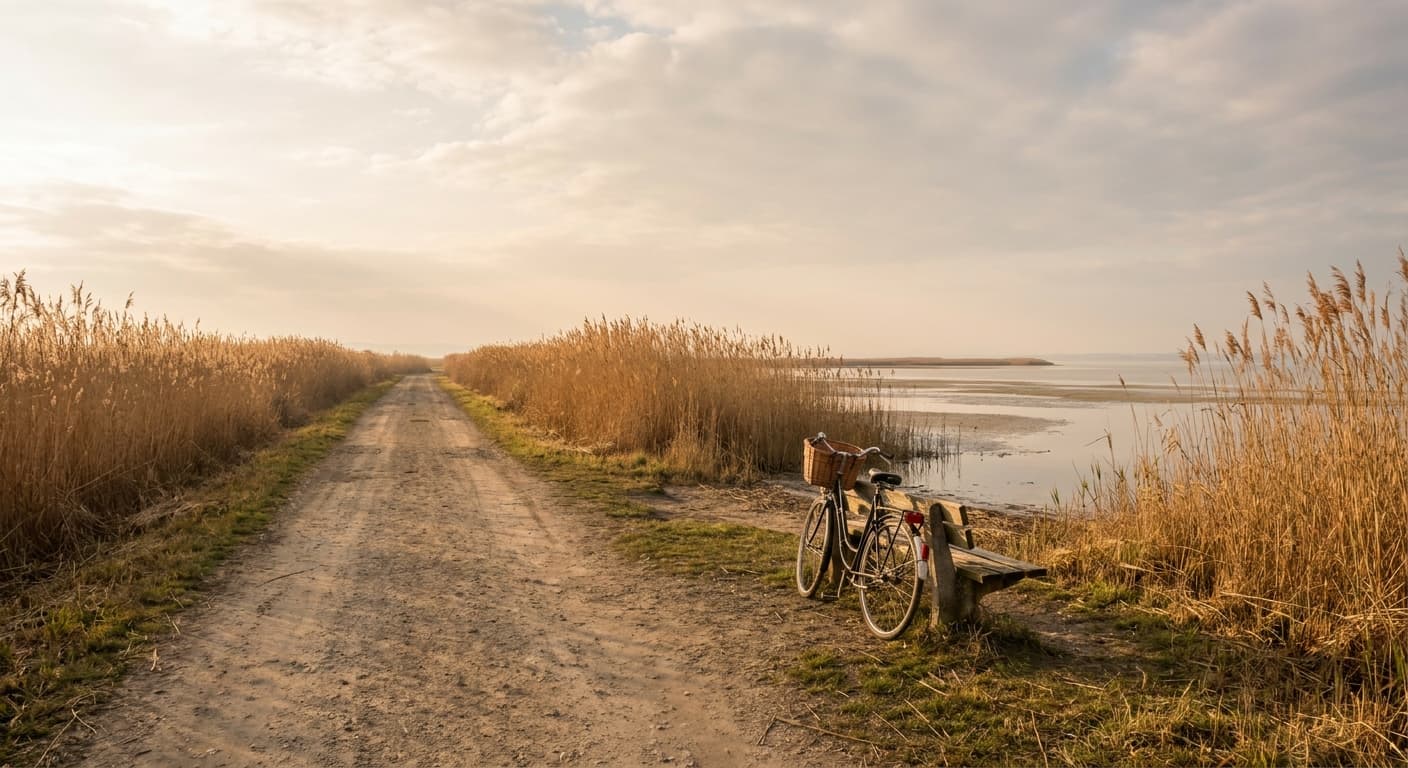
Slow travel at Lake Neusiedl: arriving instead of ticking boxes
Slow travel at Lake Neusiedl is about shaping a holiday around rhythm, light and proximity to the water rather than around a crowded checklist. Rust is a natural base for that kind of stay. The old town is close, the lake is close, vineyards and reed beds are part of everyday scenery, and the landscape encourages a calmer pace. At Seehütte Sonnenschilf, the day starts not with traffic but with water, reeds and sky. That is the essence of mindful travel: fewer changes, less noise and more attention to the place you have chosen.
The region offers many attractions, from cycling routes and wine taverns to nature experiences and cultural evenings. Slow travel does not mean ignoring them. It means choosing fewer experiences and allowing them to become richer. You might wake early to see the first light over the lake, cycle gently towards Rust or Mörbisch, spend the afternoon reading on the terrace and walk into the old town for dinner. The holiday becomes less packed, but more memorable.
Why Rust suits mindful holidays
Rust combines short distances, varied landscapes and a strong local identity. The historic centre can be reached quickly, the lakeshore alternates between reeds, open water, jetties and small harbour scenes, and the surrounding vineyards shape the view. You do not need long drives to feel variety. Most experiences are within a comfortable daily radius, so the holiday is not dominated by transport, parking and rigid schedules.
Burgenland Tourism describes the Lake Neusiedl Cycle Route B10 as one of the region's most popular cycling routes, with 117.5 kilometres around the steppe lake. For a slow stay, however, the point is not to complete the whole circuit. Often it is better to choose one section: a morning ride by the water, a shaded break, a glass of regional wine and a quiet stop at a jetty. The relatively flat landscape and wide horizons invite you to reduce speed.
Rust also sits in the cultural landscape of the Lake Neusiedl area. Wine, lake, reeds, villages, historic lanes and nature are closely connected here. Slow travel helps you notice those connections: how vineyards slope towards the water, how the old town responds to light and wind, and how the reed belt changes colour through the seasons.
A daily rhythm without hurry
An ideal slow-travel day begins early, but not in a rush. Step onto the terrace and let the day arrive first. At Lake Neusiedl, moods can change within minutes: mist over the water, golden reed tops, birds in backlight and later a bright sky above the vineyards. If you do not immediately fill the morning with a drive or appointment, you gain a sense of place that no guidebook can replace.
After breakfast, a short bicycle ride is often enough. Seehütte Sonnenschilf provides two adult mountain bikes, so small trips can be made without extra organisation. A route towards the old town, harbour, vineyards or Mörbisch can be more rewarding than a demanding tour. The value lies in movement, fresh air, pauses and the freedom to stop whenever the light over the lake becomes beautiful.
The afternoon belongs to slowness. Many guests plan these hours too tightly, although the terrace directly by the water is one of the strongest reasons to stay here. Reading, resting, cooking, drinking coffee, watching the reeds, writing notes or simply doing nothing are not gaps in the programme. They are the real luxury of a lake-cottage holiday. With 67 square metres of living space and a generous outdoor terrace, a quiet day feels comfortable rather than limiting.
Observing nature with respect
Slow travel at Lake Neusiedl is also about respectful contact with nature. The lake, reed belt and nearby Seewinkel are sensitive habitats. Burgenland Tourism presents Neusiedler See-Seewinkel National Park as a cross-border national park and an important destination for birdwatching and nature experiences. For guests, this means that observation is most rewarding when it is quiet: stay on paths, respect protected areas, avoid noise and take time for a few patient moments instead of rushing towards wildlife.
In the reeds, less is often more. Binoculars, calm movement and patience allow you to notice wind, water, birds and small sounds along the shore. These impressions are not spectacular in a loud sense, but they stay with you. A slow traveller collects attention, not trophies. That fits the character of the Seehütte: it is a retreat at the water, not a loud centre of activity.
Enjoying wine, food and regional pauses
Rust and its surroundings are closely linked to wine and regional cuisine. For slow travel, that is ideal because enjoyment needs time. Instead of comparing several places in one evening, choose one consciously. Ask for local wines, try seasonal dishes and leave the evening open. Some of the best holiday moments come from an unplanned conversation, a detour through a quiet lane or the walk back in the last light.
It is also worth using the lake cottage as more than a place to sleep. Shopping locally, cooking simply, eating on the terrace and spending the evening by the water can be as valuable as a restaurant visit. The equipped kitchen, outdoor area and grill make quiet evenings easy, especially for families or small groups.
How to plan your slow-travel stay
The most important planning rule is simple: plan less. Set only one main focus per day. One day can belong to the water, one to cycling, one to the old town, one to the national park or one to a cultural evening. Between those anchors, leave open time. During a stay of several nights, this creates a pleasant rhythm and allows you to respond to weather, wind and mood.
Pack comfortably rather than maximally. Bring shoes for jetties, paths and old-town lanes, but avoid luggage that makes the stay complicated. If you travel with children, fewer activities often mean less stress. If you travel as a couple, open evenings are valuable. If you come with friends, shared meals and terrace hours create more connection than a tight programme.
FAQ: Slow travel at Lake Neusiedl
How many nights should I plan? At least three nights are ideal because they allow time to arrive, enjoy an active day, keep one quiet day and leave without pressure.
Do I need a car during the stay? A car is useful for arrival, but many local routes can be handled by bicycle or on foot once you are in Rust.
Is slow travel suitable for families? Yes. Fewer programme points usually mean less stress, especially when water, terrace, short rides and simple meals are part of the stay.
Why is Seehütte Sonnenschilf a good base? It is directly by the water, accommodates up to five guests and includes two adult mountain bikes and a boat, so you can experience a lot without constantly changing location.
Book Seehütte Sonnenschilf Now
Experience Lake Neusiedl up close – right from the water. The Seehütte Sonnenschilf accommodates up to 5 guests, including two adult mountain bikes and a boat. Perfect for families, couples, and small groups.
Check Availability & Book →Markus Hoefinger
Host of Seehütte Sonnenschilf in Rust at Lake Neusiedl. Has known the region since childhood and shares personal insider tips here.